
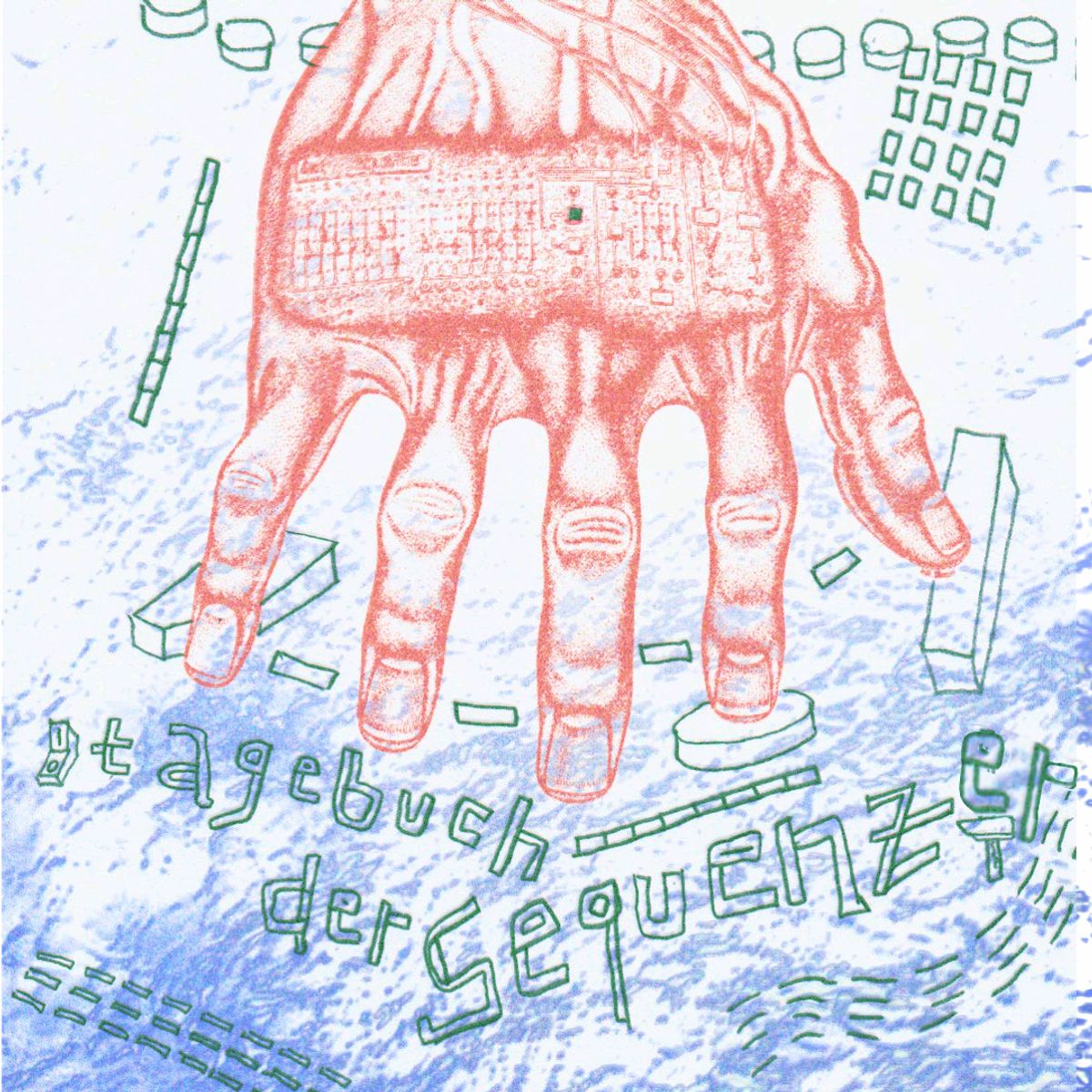
Tagebuch der Sequenzer
Welcome to ‘’Tagebuch der Sequenzer’’, a show that invites you to ponder how a machine might feel. For now, we set aside the question of whether that’s even possible. Many of the electronic sounds that have become genre-defining landmarks were born, more or less, by chance. Our gaze upon the machine grants it a voice, an identity, a soul. Some machines compensate for our physical limitations and push the boundaries of what is possible. They become allies in the creative process, like arpeggiators and sequencers. Take, for instance, the first advertisement for the ARP Sequencer in 1976, which claimed: “For keyboard musicians who need an extra hand.” The sequencer becomes our third hand. But can we develop a feeling for it? We program machines to do what we want them to do. Is it, then, about control? No. The relationship is not one-sided – the signal returns to us, and in doing so, the machine programs us through its properties and its imperfections. The machine speaks through us, and we speak through it. The relationship between ideas, tools, and music is by no means linear, as Atom Heart (Uwe Schmidt) recently explained in a lecture at ZHdK. The boundaries between these three categories are equally blurred. Where does the human stand between idea and tool? Where does the machine end, and where does the idea begin, especially when that idea is partly shaped by the potential and character of the machine? Am I, as a human, a pure idea, or do I see myself as a cyborg who uses devices to transform ideas into objects? Is music alchemy? Perhaps we don’t talk enough about inner machines. After all, these electrical networks were built according to human logic, so we might conclude that the processes within the machine are not so different from our own. When I program a device, am I simultaneously programming myself?